
No Drugs! Death, Maybe

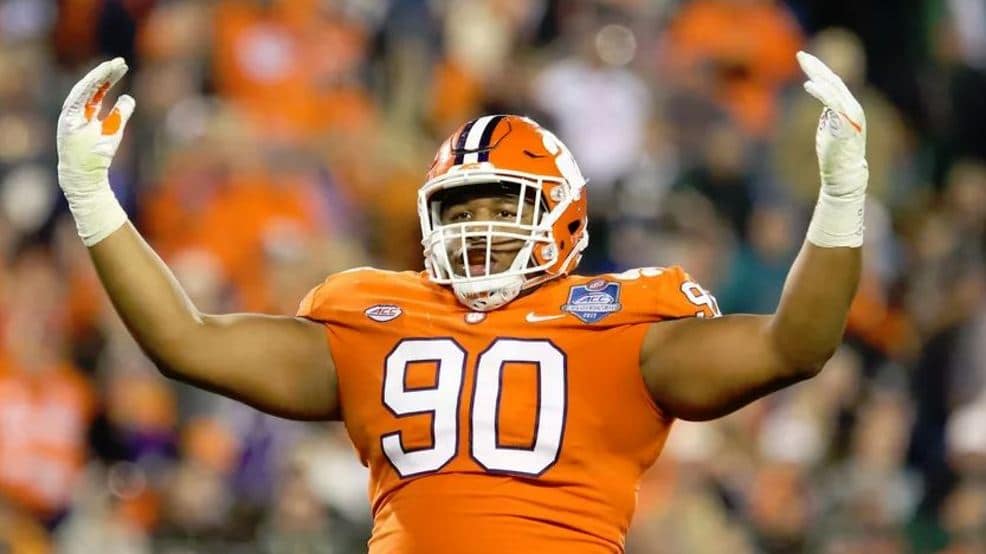
How many student athletes die from steroid use? That was the first thought to cross my mind after hearing that Clemson players, Dexler Lawrence, Zach Giella and Braden Galloway, were suspended from the BCS Championship Playoff. Despite having filed an appeal last week, they won’t be on the field tonight in the Championship Game.

I don’t believe that death is the only consequence. Steroids are unhealthy, and using them is considered cheating. However, when steroid use is viewed against the backdrop of sudden cardiac arrest and death in sport, it really makes me wonder about our priorities.

The NCAA set forth its policy on steroid use in the NCAA Drug Testing Program. The policy identifies drugs that are “potentially harmful to the health and safety of the student-athlete.” The rationale for the policy seems to reflect a “dedication to the ideal of fair and equitable intercollegiate competition at their championships and postseason bowl games.

So, we’ve accepted the reality that our student athletes can be randomly tested for drugs during the season. Before the “big” game, that testing should be mandatory. We have also accepted that these tests are reliable enough to warrant suspension from “big” games, even if there’s a chance we’re wrong. In the case of the Clemson players, there are thirty-six supplements that contain the banned substance of ostarine. This is a very different approach than we’re taking to sudden cardiac arrest and death.

Four years ago, Brian Hainline, the Chief Medical Officer of the NCAA, suggested that all high risk athletes, namely basketball and football players, be required to undergo a cardiac exam before taking the field or court. Research supports this position and shows that heart screenings are far more effective at detecting heart conditions in NCAA athletes.

The backlash was brutal and the idea was quickly scrapped.

All or nothing shouldn’t be the only choice when setting policy for the health and safety of student athletes. It’s not for steroids.

Last year, the news media reported the deaths of nine student athletes from suspected sudden cardiac arrest. Yet, no student athlete was randomly tested for heart conditions this season, and none of the players from Notre Dame, Oklahoma, Clemson and Alabama were required to get a heart screening before the BCS Championship Playoffs. Some schools do provide heart screenings for their student athletes. This year, Penn State football discovered career-ending conditions in two of its players.

If steroids pose a significant health risk for our student athletes, I welcome testing. If steroid use threatens the integrity of sport, let’s prevent and punish its use. But, is this about health or cheating? If it’s about health, let’s apply the same or stricter standards to testing for heart conditions. I think that we can all agree that losing a game because of cheating sucks, but losing a player is tragic.

Jake Berman

“I attended a heart screening at Colonial Middle School when I was ten. I was in the marching band and liked to hike and rock climb. I was diagnosed with Wolff Parkinson White Syndrome. After my procedure, I kept doing the same things.”

Whitney Jones

Whitney’s commitment to heart health advocacy began at 10 years old when she and her mother, Rayna, were diagnosed with Long QT Syndrome during a Simon’s Heart screening at Downingtown West High School. Despite the diagnosis, Whitney pursued her passion for cheerleading and continued to thrive in the sport through her college years at St. Joseph’s University. After graduating, Whitney joined Stryker Instruments as the Senior Specialist for Off-Site Meeting and Events, where she skillfully orchestrates events that promote health and medical innovation. Further extending her impact, Whitney is an active member of the Simon’s Heart Young Professionals Committee, while her mother Rayna contributes her expertise on the Board of Directors.

Katie Asper

“I attended a heart screening at Upper Dublin High School when I was ten. I played soccer. I was diagnosed with Wolff Parkinson White Syndrome and had an ablation to fix the problem. I attend Temple University.”

Matthew Green

“I attended a heart screening in Mason, Ohio, when I was ten. I participated in baseball, basketball, and diving. I was diagnosed with an atrial septal defect. I had surgery to repair the hole and started wearing a protective shirt during activity. I am graduating from Miami University.”

Valerie Krawitz

“I attended a heart screening at Colonial Middle School when I was ten. I played baseball, soccer, and track. I was diagnosed with Long QT Syndrome and an atrial septal defect. I had heart surgery to repair the hole and I take medicine for the Long QT. I can’t play competitive sports like I once did, but found other activities. Next year, I’m attending Penn State University.”

Drew Harrington

“I attended a heart screening at Radnor High School when I was ten. I played lacrosse, tennis, and basketball. I was diagnosed with Wolff Parkinson White Syndrome. I used to feel my heart beat really fast, but just assumed it was fine. Coincidentally, on Simon’s 7th birthday, I had a procedure called an ablation. Today, my heart is fine and I attend the University of Richmond.”

Alaysia Keeley

“I attended a heart screening at Norristown High School when I was ten. I played softball and enjoyed going to the mall with my friends. I was diagnosed with Long QT Syndrome. I had to stop playing sports and drinking soda. Now, I take medication and live a normal life.”

Kyle McCabe

“I attended a heart screening at Norristown High School when I was ten. I played baseball, basketball, and football. I was diagnosed with Long QT Syndrome. I stopped playing sports to protect my heart, but I still manage to have fun.”

Melissa Fair

“I attended a heart screening at Colonial Middle School when I was ten. I loved dancing and hanging out with my friends. I was diagnosed with Partial Anomolous Pulmonary Venous Return and Atrial Septal Defect. The doctor told me that my life would have been cut short if I hadn’t found out. I’m graduating from Penn State University this year.”

Zach Steffens

“I attended a heart screening at Stillman Elementary School in Tenafly, N.J., when I was fourteen years old. I love running, Tae Kwon Do, and Armenian cultural dancing. I was diagnosed with a rare congenital defect called ALCAPA (Anomalous Left Coronary Artery from the Pulmonary Artery). I had open-heart surgery and recovered well. One month later, I suffered a cardiac arrest and an automated external defibrillator (AED) saved my life. I now have an implantable cardioverter defibrillator (ICD) and am healthier than ever. I will be attending The College of New Jersey and majoring in biomedical engineering.”

Annie FitzPatrick

“I went into sudden cardiac arrest at a local convenience store when I was 19 years old. My heart stopped and the only reason I am alive today is because an AED was readily available. I was diagnosed with Long QT Syndrome shortly after and was introduced to Darren and Phyllis with Simon’s Heart. I have been an active volunteer ever since. I went on to graduate Cum Laude from Drexel University with a double major in Business Analytics and Marketing and now work at a leading chemical company.”

Maeve Quinn

"I had a sudden cardiac arrest during softball tryouts at my high school. I was 15 years old. Thanks to the quick thinking of my coach and athletic trainer, they started doing CPR and using an AED immediately. This helped save my life. I had an implantable defibrillator surgically placed in case this happens again. I volunteer to educate people on the importance of screenings, learning CPR and the use of AEDs. Anyone can save a life like mine! I am planning on going to college for nursing."